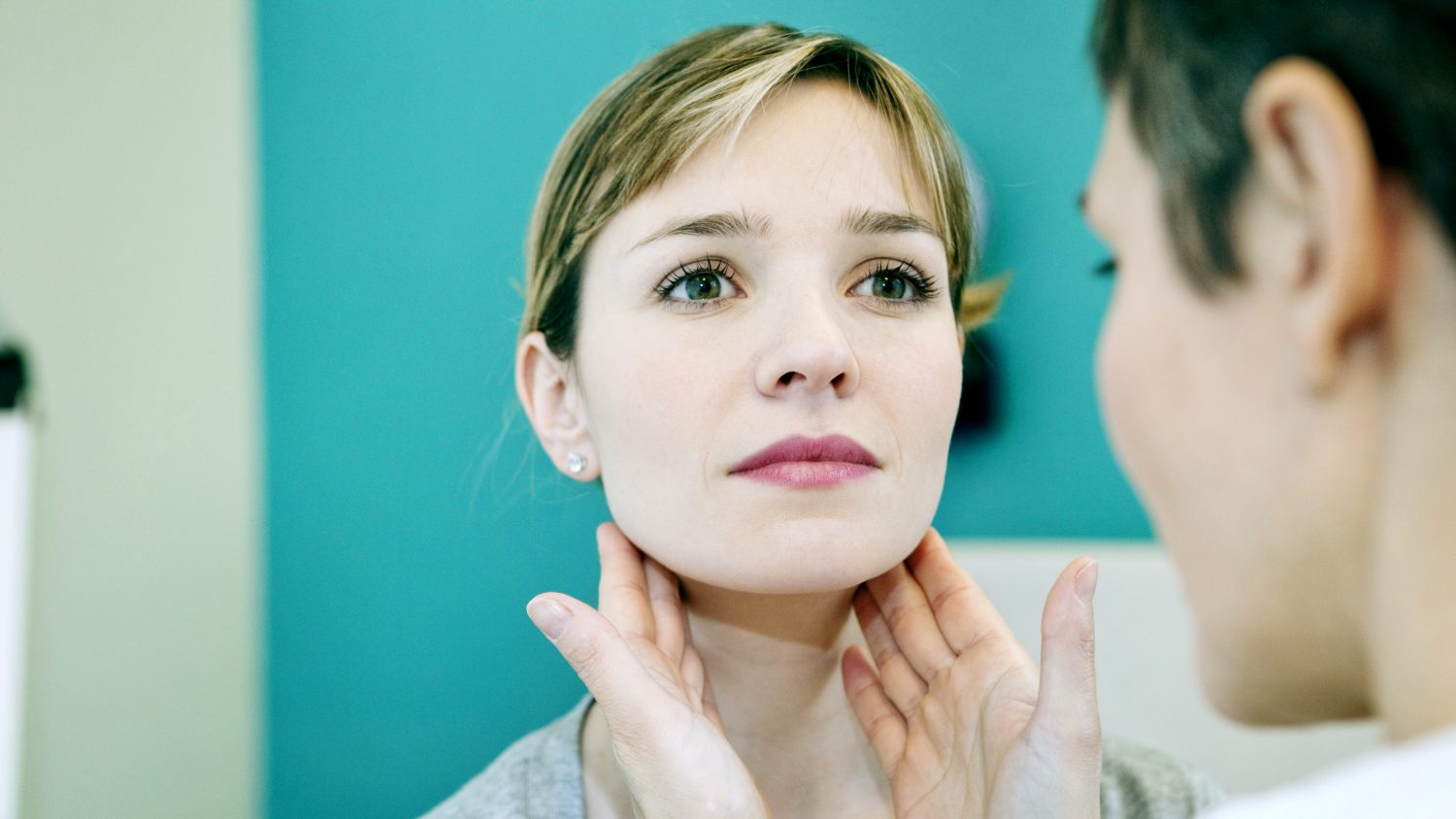
I hope this brutally honest post gives some insight into the process of a lymph node fine needle biopsy – and how the fear of having cancer affected my life over the past few weeks. If you have lymph node cancer, my experience is nothing compared to yours and I wish you the best possible recovery. That said, here are my recent experiences.
A few weeks ago, my haemotologist found a lump in my neck.
She raised the prospect of cancer, scheduled me for a neck ultrasound and referred me to an ear, nose and throat specialist, who would decide if I needed a biopsy. The reality didn’t hit me at first. I think I was in shock.
I’m only 33 and have been mostly healthy all my life. I couldn’t understand why she would suggest a biopsy. Unless there was a good reason?
Immediately, I couldn’t stop myself jumping to the worst possible conclusions. And when I had to tell my boyfriend, my conclusions overwhelmed me.
I stood outside the hospital in tears, on the phone, my mind chased itself down a rabbit hole to thoughts of death. I didn’t want to die. I didn’t want to lose our awesome life together. And I didn’t want him to go through that either.
We decided not to tell anyone what was happening, to prevent anyone worrying – except us. And as I waited for my ultrasound date, my own anxiety faded somewhat, as I allowed myself to focus on the everyday madness of the newsroom.

This stock image shows exactly what my initial lymph node examination looked and felt like (Alexander Raths/Shutterstock)
But come the day of the ultrasound, I was a bag of nerves and tried desperately to glean any information about the results from the doctor.
She reassured me it looked fine, but said the specialist needed to look at it. She added that she wasn’t supposed to say anything, but I looked so worried she couldn’t help it.
Although it was against the rules, I really appreciated her effort to reassure me – it definitely helped me go about my daily life afterwards. Until my visit to the specialist, who thought the first ultrasound was inconclusive and ordered another one – and a biopsy.
This scared the hell out of me. If a specialist thought it was worth doing a biopsy, I must be facing a real risk here.
What happens during a lymph node biopsy?
The day of the biopsy I was extremely nervous. I had no idea what to expect. I still hadn’t told anyone what was happening. I hoped it would be as painless and inconspicuous as possible. As it turned out, it wasn’t painless, but it was manageable.
For anyone who wants to know what a lymph node fine needle biopsy is like, what follows is a brief description. Those of you with an aversion to pointy things doctors stick in your arm to give you vaccinations – look away now.
The doctor used a needle, about the size usually used to take blood samples, to inject the biopsy area with a local anaesthetic. This was painful, until the anaesthetic kicked in after a few minutes.
Then he swapped in a different, similar-sized needle to draw out the lymph node cells. These are deeper down than blood cells so it was much more uncomfortable than having bloodwork.
The process felt like it took quite a while, as he took several different samples, but overall, it involved less pain than I was expecting, considering they were taking cells out of my neck, and was mostly just uncomfortable.

This stock image shows exactly what it was like to have a lymph node ultrasound at Vancouver General Hospital. The biopsy was exactly the same setup. (Tyler Olson/Shutterstock)
They checked my neck wasn’t bleeding and placed a large plaster over the biopsy area. Then I was free to go on my way. This time there were no assurances everything was ok.
Afterwards, my neck swelled up, and I could feel the biopsied lymph node, scarily hardened under my skin. My neck hurt to touch, but I was able to work the same day and over the following weeks it reduced little by little.
I tried to be philosophical. Who knew what the verdict would be? Maybe this was it. What if this was the end? Did I have serious regrets? Should I change anything given the jolt of reality these tests forced upon me?
I evaluated my life and decided I am incredibly lucky – I am truly happy with how I’ve spent my time so far. I love living in Vancouver, I love working in the newsroom and I love the people around me.
I decided to embrace some challenges I’d been mulling over. And I jumped off that rock that’s been taunting me for years at Brohm Lake. I tried to hold on to the exhilaration of life and imagine everything turning out OK.
If not, I was petrified by the thought I might be about to lose all that. As the day of the results grew nearer, I began to feel like I was staring down the barrel of a gun.
Four days before my results, I awoke with excruciating neck pain that, in my state of fear, I could only associate with the biopsy. Had the procedure done damage? Was the lymph node infected? Or did this mean I have cancer?
An attempt to take painkillers and go into work failed and I ended up crying my eyes out at my local doctor’s surgery.
He told me it was probably nothing – so reassuring – and gave me a heady cocktail of muscle relaxants and anti-inflammatories.

This stock image hopefully illustrates the extreme neck pain I experienced almost two weeks after my lymph node biopsy. I could barely move my neck.
After a day knocked out by the drugs, the pain had eased enough to get on with normal life. As much as I could, with three days to go until my biopsy results.
The night before the results, I couldn’t sleep for fear of just about every bad thing I could imagine.
My overwhelmed mind apparently wasn’t satisfied with tormenting me with the idea of having cancer and what the hell would mean.
At various times, I was also struck with the absolute conviction someone was breaking in and stealing our snowboards. Or that a raccoon had entered through an open window and was about to attack us in our sleep.
The mind can be a crazy place when forced to face its worst fear.
The next day, as I cycled to the hospital, my hands were shaking. My boyfriend met me there, having agreed to come with me in case it was awful news.
We waited. My mind in turmoil. This was it. What was I even supposed to do at this point? I could only face what was before me. A hospital waiting room. A specialist with possibly devastating news.
And then he appeared. Absolutely full of fear, but determined to face facts, I asked if it was terrible news and if my boyfriend should come in with me.
He smiled. “It’s not terrible news – but you can bring him in anyway.”
He explained there was no cancer, just reactive cells trying to protect my body from the wear and tear of life.
I thought I would feel instant relief, relaxation and happiness. But when we left five minutes later, I found it hard to comprehend what just happened.
I sat trying to formulate my confused thoughts and emotions into a coherent state of mind. I had spent the last few torturous weeks bracing myself for the worst.
Now here I was, expecting to feel full of the carefree wonder of life. But instead I felt ramped up for a fight I so, so thankfully no longer had to face.
Slowly though, the relief and joy of my reality started to wash over me. We smiled. We laughed. We hugged. We decided to share the good news with our family and friends.
And I raced home, knowing there was one last thing to do before my adrenaline rush faded, determined to use this energy for something good.
And I began writing.

Me, sunny, relaxed and happy – exactly how I felt when I had come to terms with everything being just fine. (Conrad Olson)
A version of this blogpost was published on:
